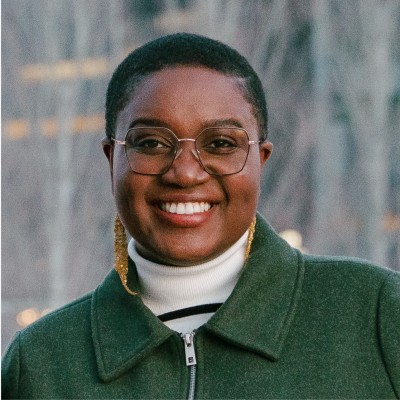
About me
I’m a Project Manager at Ubisoft Montréal with a foundation in software development, and I earned my MSc in Computer Science from the Georgia Institute of Technology in May 2026, specializing in Human-Computer Interaction.
My career has moved from writing code to leading the people and processes around it. I started as a developer in client support at KUBRA, grew into leading a team of junior developers across enterprise client products, then moved to Ubisoft Montréal to lead an internal tools programming team before stepping into project management. Today I design planning frameworks, drive delivery practices, and build the reporting that helps teams see their own work clearly — while staying close enough to the technical side to be a credible partner to engineering.
Studying HCI part-time alongside that work reshaped how I think about the systems I help build. Coursework in cognitive science, AI ethics, and interface design gave me a vocabulary for things I’d been noticing for years: how people actually form mental models of the tools they’re handed, and how much of a product’s success is decided before a single line of code is written.
Coursework
The Coursework section walks through my OMSCS courses and the projects and papers I built in each — from a WhatsApp interface redesign and a literature review on working memory and second-language acquisition, to an AI agent that solves visual analogy puzzles and a wearable-sensor system for classifying physical therapy movements.
A note on access: In line with Georgia Tech’s academic integrity policy, I can’t publish my actual code, papers, or assignment write-ups. I will only give access to my work for specific needs such as potential employers. Students will not be granted access.
Background
The CV section covers my professional experience, education, and skills in full.
Research interests
Alongside my work in industry, I’d like to keep doing research. What draws me to HCI is practical, everyday design — Don Norman’s principles were my introduction, and they changed how I read the objects and interfaces around me, not just the ones I build. I’m also following human-AI interaction closely: AI is changing what people expect from software, and a lot of settled interaction patterns are open questions again.
My graduate work centered on health and wellbeing technology — a system that classifies rehabilitative shoulder exercises from smartphone sensors, and a Parkinson’s symptom tracker that posts assessment results straight to a patient’s health record. It also took me into cognition and learning, the subject of my literature review on working memory and second language acquisition, and AI ethics and fairness.
I’m always glad to connect with people working on similar problems — especially here in Montreal or in the GTA, and especially where there’s room to collaborate.
Reach me at whitevanessa14@gmail.com or on LinkedIn.